Notifications
Posted by Blog Mgr1
Filed in Living-Memorial Features 37 views
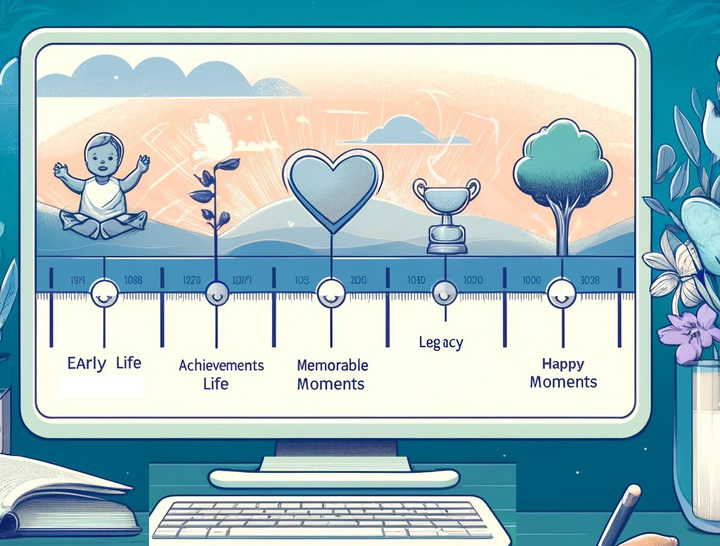
Creating a timeline for an individual's life story involves several important considerations to ensure it is both informative and engaging. Here are some key factors to keep in mind:
Objective and Audience: Understand the purpose of the timeline and who the intended audience is. Is the timeline for educational purposes, a personal project, or a professional biography? The audience might influence the level of detail and the style of presentation.
Key Events: Decide which events are critical to include. These might be birth, education, significant life milestones, career highlights, and other personal achievements or setbacks. The selection of events should narrate a coherent story of the individual’s life.
Chronology: A timeline is inherently chronological, so ensure that events are accurately dated. If exact dates are not known, approximate periods or years may be used. Consistency in how dates are presented (e.g., full dates, just years, or a mix) is also important.
Context: Providing context for significant events can help the audience understand their importance. This might include brief descriptions or annotations that explain how an event fits into the broader life story or historical context.
Visual Design: Decide on a format that enhances readability and engagement. Timelines can be linear, vertical, horizontal, or even interactive if presented digitally. Consider using color coding for different types of events (e.g., personal vs. professional) or including photographs and icons to make the timeline more visually appealing.
Sensitivity and Privacy: Be mindful of sensitive information, especially if the timeline covers aspects of someone’s personal life or if it will be publicly accessible. Ensure that sharing the information respects the privacy and wishes of the individual or their family.
Updates and Flexibility: Life stories can evolve, and new information might come to light. Design the timeline in a way that allows for easy updates and additions.
Sources and Verification: Ensure all information is accurate and well-sourced, especially for a timeline that will be used in educational or professional contexts. Citing sources where appropriate adds credibility.
Accessibility: Ensure that the timeline is accessible to all users, including those with disabilities. This includes using readable fonts, appropriate contrasts, and alt text for images in digital timelines.
By considering these factors, you can create a detailed and meaningful timeline that effectively tells an individual's life story.
-Living-Memorial-

Comments